

In the autumn of 218 BC, a Carthaginian army came down out of the Alps into northern Italy — and Rome realised it was fighting for its life. It had marched overland from Spain, through hostile tribes, across a great river, and over snow-covered passes no army had ever crossed, war elephants at its head. Its commander was Hannibal Barca.
He was twenty-nine. In two years he would inflict three of the worst defeats in Rome's history — then lose the war, because Rome simply refused to quit.
The boy who swore to hate Rome
Hannibal was born in 247 BC in Carthage, on the coast of what is now Tunisia. His father, Hamilcar Barca, had fought Rome in the First Punic War, which Carthage lost in 241 BC, surrendering Sicily and paying a heavy indemnity.
Polybius and the Roman biographer Cornelius Nepos both tell how Hamilcar, before sailing to rebuild Carthaginian power in Spain, took his nine-year-old son to the altar and made him swear he would never be a friend to the Romans — Nepos gives the oath in Hannibal's reported words: his father "bade me lay hold of the altar and swear that I would never be a friend to the Romans." Hannibal grew up in his father's army in Spain and inherited both the command and the hatred.
Hamilcar died in 229 BC; his son-in-law Hasdrubal succeeded him, and when Hasdrubal was assassinated in 221 BC the army chose the twenty-six-year-old Hannibal. Within three years he had subdued Spain's tribes — then besieged Saguntum, a Spanish city allied with Rome. It fell after eight months, in 219 BC; Rome demanded Hannibal's surrender, Carthage refused, and in spring 218 BC Rome declared war — the Second Punic War.
The road to the Alps

Hannibal's plan was audacious. Rome expected attack by sea, where its navy ruled. Instead he would march overland from Spain to Italy — some 1,500 miles through Gaul and over the Alps — and strike Rome on its own soil.
He set out from New Carthage (modern Cartagena) in spring 218 BC with, Polybius says, about 90,000 infantry, 12,000 cavalry, and 37 war elephants.
By the foot of the Alps his army had shrunk to roughly 50,000 infantry and 9,000 cavalry, the 37 elephants still with him. Ahead lay passes no army had ever crossed, held by hostile tribes, with winter closing in.
Fifteen days in the mountains
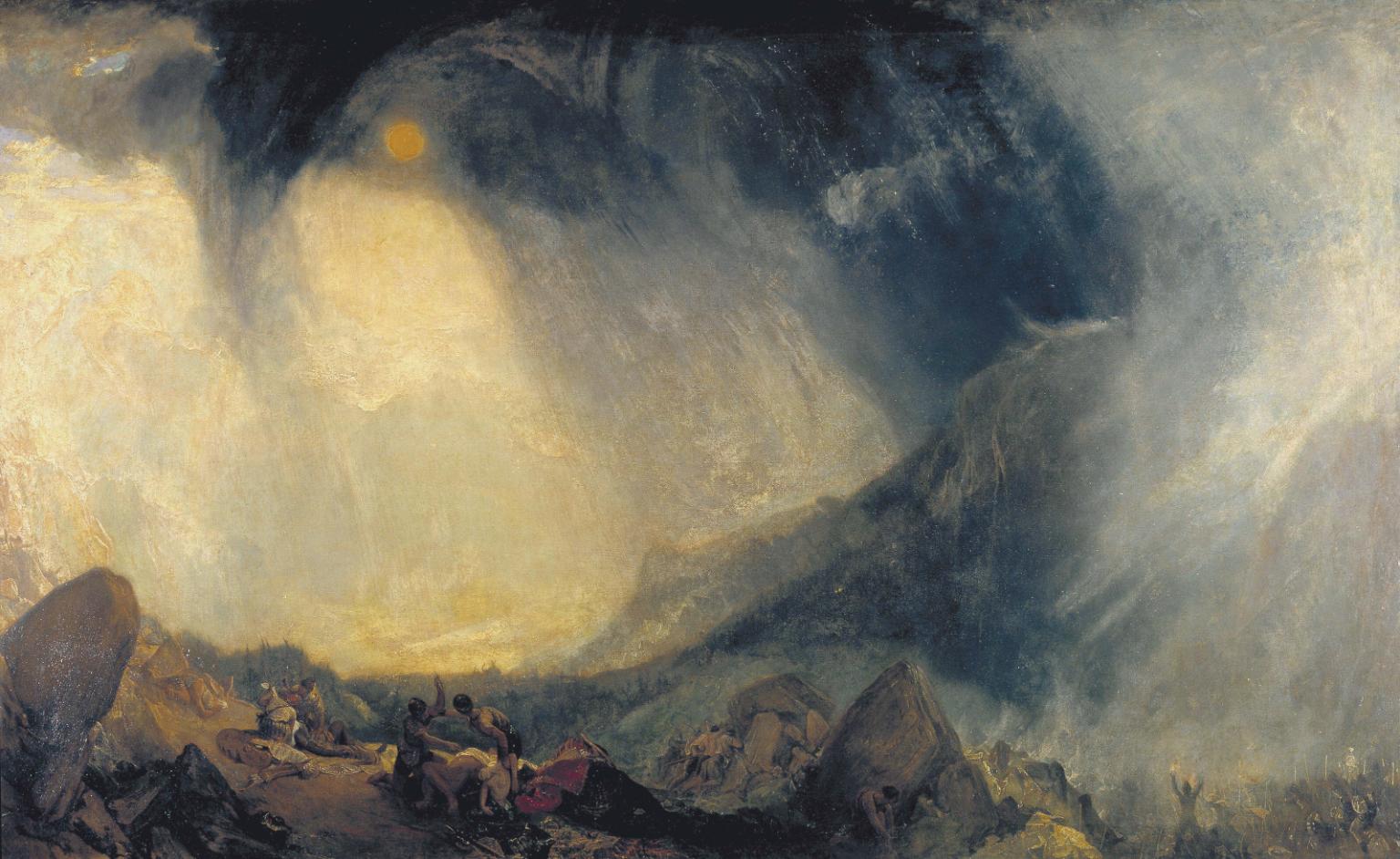
The crossing took about fifteen days, Polybius says — through narrow defiles where tribesmen rained rocks from above, over a rockfall the men cut through, and snow at the summit.
Hannibal entered the Alps with about 50,000 infantry and 9,000 cavalry. Fifteen days later he came down into Italy with 20,000 infantry and 6,000 cavalry — roughly half his army gone to cold, falls, ambush and desertion.
The exact pass has been argued over for two millennia. Polybius, who travelled the Alpine routes himself, described the landmarks but never named it; modern candidates include the Col du Mont Cenis, the Col du Clapier and the Col de la Traversette, and a 2016 study found horse-manure microbes in Traversette soil dating to Hannibal's time — the strongest clue yet, though not proof.
His elephants survived the crossing, but the winter finished almost all of them: by spring 217 BC only one remained, the animal Hannibal rode through the flooded Arno marshes — a three-day march that cost him the sight of one eye. He stayed half-blind for life.
Two traps in six months
At the Trebia in December he laid his first great trap: he drew the Romans across the freezing river before dawn — cold, hungry, disordered — into an ambush by troops his brother Mago had hidden in the brush. Much of the Roman army was destroyed.
Then came Lake Trasimene, on 21 June 217 BC — the largest ambush in military history. Hannibal hid his army in the hills above the lake and let the consul Flaminius march his column of about 30,000 men into the trap in morning mist; attacked from front, flank and rear, about 15,000 Romans were killed, including Flaminius, and most of the rest were captured.
Cannae: the perfect trap
Rome's answer was Quintus Fabius Maximus, appointed dictator, who refused Hannibal the pitched battle he wanted, shadowing him and harassing his foragers instead. The "Fabian strategy" still bears his name, but the Romans hated it: after a year of watching Hannibal ravage Italy unopposed, they raised an army of about 80,000 men — eight legions, the largest Rome had ever fielded — and marched to destroy him.
On 2 August 216 BC, on the plain of Cannae in Apulia, Hannibal gave them the battle they wanted. He placed his least reliable troops, Gauls and Spaniards, in a crescent bulging towards the Romans, his disciplined African infantry on the flanks, his cavalry on the wings. The Romans charged in; the crescent bent backwards, drawing them into a pocket. Then the African infantry wheeled inward from both sides, and Hannibal's cavalry, having routed the Roman horse, swept around and closed the ring from behind. Packed so tightly they could barely raise their swords, the Romans were cut down for hours.
At Cannae, Hannibal's army of about 40,000 infantry and 10,000 cavalry destroyed a Roman army of about 80,000. Polybius puts the Roman dead at 70,000; Livy at about 48,000. Either way, it was one of the bloodiest single days in the history of war — and Hannibal lost barely 6,000 men.
Paullus died in the crush, with scores of senators and officers; Varro escaped with a remnant of cavalry. In a single afternoon Rome lost a fifth of its military manpower of fighting age — and the phrase "Hannibal is at the gates" entered the language as a cry of panic.
Watch the story on ChroniVara:
Rome refuses to lose
And yet Hannibal did not march on Rome. He had no siege equipment, his army was too small to hold what it took, and he hoped Rome's Italian allies would desert and force a negotiated peace. Some did — Capua, Italy's second city, went over to him. But Rome never wavered: the Senate forbade even talk of peace, raised new legions, and went back to Fabius's strategy — never fight Hannibal head-on, wear him down, attack Carthage's empire elsewhere.
For thirteen more years Hannibal fought in southern Italy, winning battles but gaining no decision, while Rome reconquered Spain and carried the war to Africa. The turning point came in 207 BC, when his brother Hasdrubal crossed the Alps with reinforcements and was killed at the Metaurus before he could join him. According to Livy, the Romans threw Hasdrubal's severed head into Hannibal's camp — and Hannibal recognised in it the fate of Carthage.
In 203 BC, after fifteen years in Italy, Hannibal was recalled home: Scipio Africanus had landed in Africa, threatening Carthage. They met at Zama in October 202 BC. This time the trap failed — Scipio had studied Hannibal's tactics, neutralised the elephants by opening lanes in his lines, and his cavalry was now the better. Hannibal lost, and Carthage sued for peace in 201 BC, surrendering its war fleet and agreeing to pay Rome 10,000 talents over fifty years.
Exile and the poison ring
As Carthage's chief magistrate, the suffete, Hannibal reformed its finances and rebuilt its strength so fast Rome grew alarmed again. In 195 BC, accused of intriguing with Antiochus III of Syria, he fled into exile — first to Tyre, then to Antiochus's court. Antiochus was beaten by Rome at Magnesia in 190 BC, and Hannibal fled on, through Crete and Armenia, to King Prusias of Bithynia.
Rome never forgot him. In 183 BC an embassy arrived and demanded his surrender. Hannibal, now about sixty-four, found his house surrounded, every exit watched. Rather than be paraded through Rome in chains, he drank poison he had carried for years — Livy says he kept it under a gem in his ring — with the reported last words: "Let us relieve the Romans of their anxiety, since they find it tedious to wait for an old man's death."
Hannibal won every great battle he fought in Italy — and lost the war. Rome won because it could lose an army, raise another, and refuse to accept defeat. That, more than any single battle, is why his story is still taught in military academies today.
He was buried at Libyssa in Bithynia — modern Turkey; no one knows the exact spot. No Carthaginian account of his life survives — everything we know comes from his enemies, Polybius and Livy, writing decades after his death. The oath, the elephants, the one blind eye: all of it reaches us through Roman hands, and historians still weigh how much is fact and how much is legend. What is not in doubt is the march, the three great victories, and the day at Cannae — the day Rome came closer to destruction than ever before, and survived anyway.
Read our article on Napoleon Bonaparte, who also crossed the Alps — and sold America its greatest bargain, and browse the Ancient Civilizations archive.
References
- Encyclopaedia Britannica — "Hannibal": https://www.britannica.com/biography/Hannibal
- Encyclopaedia Britannica — "Battle of Cannae": https://www.britannica.com/event/Battle-of-Cannae
- Polybius, Histories, Book 3 (Perseus Digital Library, Tufts University) — the Alpine crossing, the Arno marshes and the lost eye: http://www.perseus.tufts.edu/hopper/text?doc=Perseus%3Atext%3A1999.01.0234%3Abook%3D3%3Achapter%3D79
- Livy, History of Rome, Book 22 (University of Virginia Library) — Trasimene, Cannae and the Arno marshes: https://xtf.lib.virginia.edu/xtf/view?docId=legacy/uvaBook/tei/Liv3His.xml&chunk.id=d69&toc.id=d69&brand=default
- Cornelius Nepos, Life of Hannibal (Attalus) — the childhood oath and the command at twenty-six: https://www.attalus.org/translate/nepos23.html
- Orosius, Histories, Book 4 (Attalus) — Saguntum, the eight-month siege and the lost eye: https://www.attalus.org/translate/orosius4B.html
- Centers for Disease Control and Prevention, Emerging Infectious Diseases (2021) — "Hannibal's Ophthalmia": https://wwwnc.cdc.gov/eid/article/27/1/19-1696_article
- BBC News — "Dung clue to Hannibal's Alpine crossing" (5 April 2016), on the Archaeometry Traversette study: https://www.bbc.com/news/science-environment-35976136
- World History Encyclopedia — "Hannibal": https://www.worldhistory.org/Hannibal/
- Livius.org — "Hannibal": https://www.livius.org/articles/person/hannibal/
Fact notes: Ancient casualty figures differ — Polybius gives 70,000 Roman dead at Cannae, Livy about 48,000, Britannica 55,000–70,000; the article gives the range. Polybius gives the crossing as 15 days; Livy implies 16. Hannibal's death is conventionally dated to 183 BC, but the sources give more than one year (183–181 BC). The oath, Hasdrubal's head, and the last words come from Livy or Nepos, reported as their accounts. The Col de la Traversette is the leading candidate for the crossing, not proven.
Comments
Post a Comment